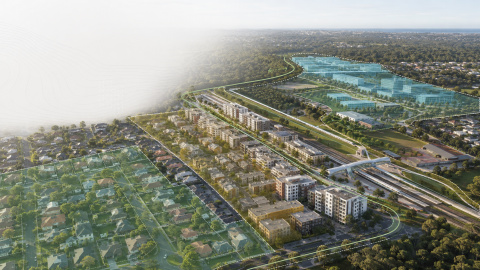
Is the 20-minute city working in Australia? What Melbourne, Sydney and Brisbane reveal
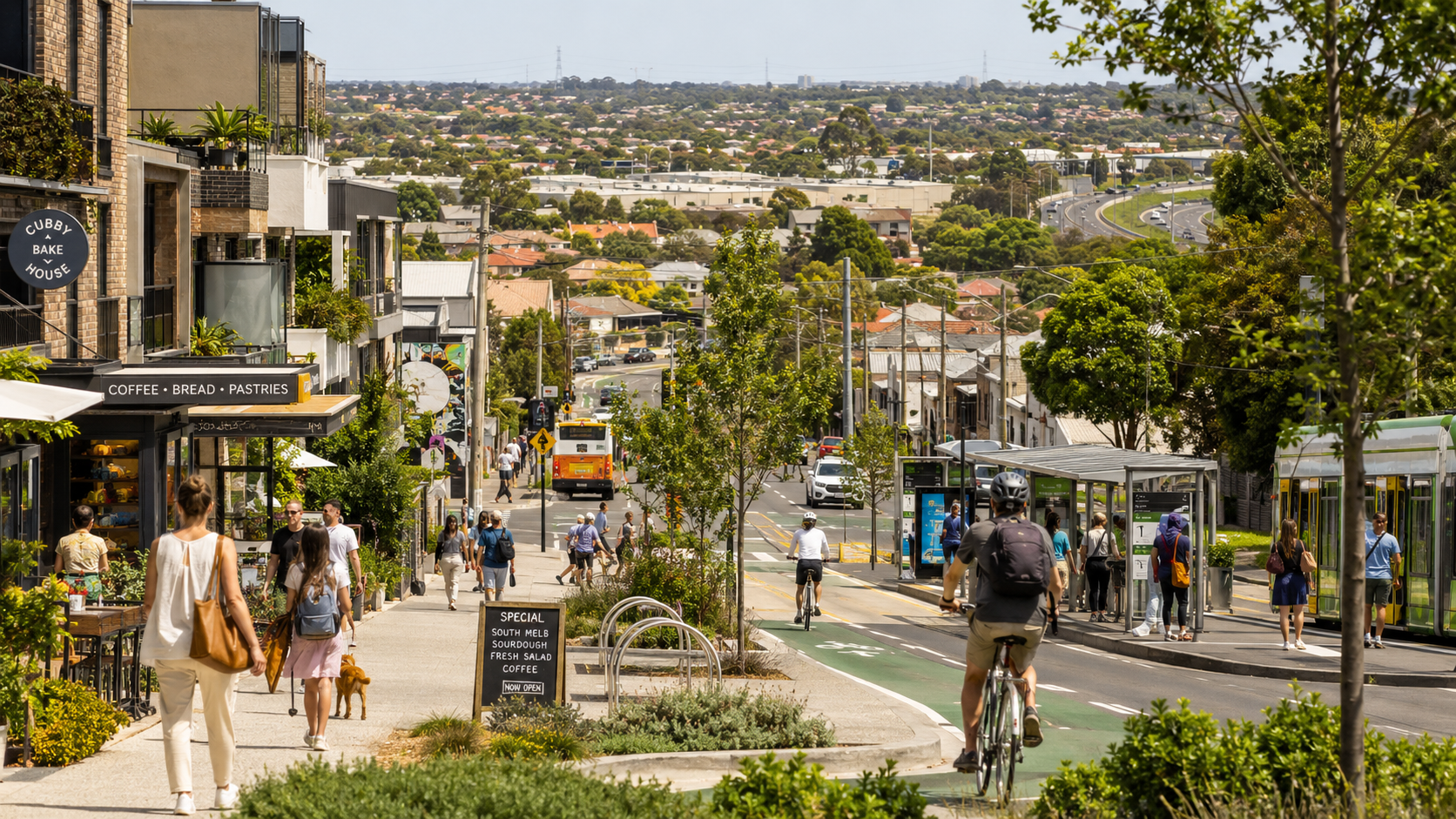
What if the school drop-off, grocery run, GP visit and commute didn’t swallow your morning? That’s the promise of the 20-minute city.
Australians spend more time commuting than almost any other developed nation, with the average capital city worker losing close to an hour each day moving between home and work, according to the Australian Bureau of Statistics. The 20-minute city promises to give that time back, reimagining communities where work, schools, healthcare and shops sit within a short walk, ride or transit trip.
But after years of strategy documents and pilot suburbs, one question matters most: is it actually working?
This article examines how Melbourne, Sydney, Brisbane, the Gold Coast and regional centres are testing the concept, where it delivers, where it stalls and what Australian cities could become by 2050.
The 20-minute city places daily needs within a 20-minute round trip by walking, cycling or public transport, cutting car dependence and lifting liveability.
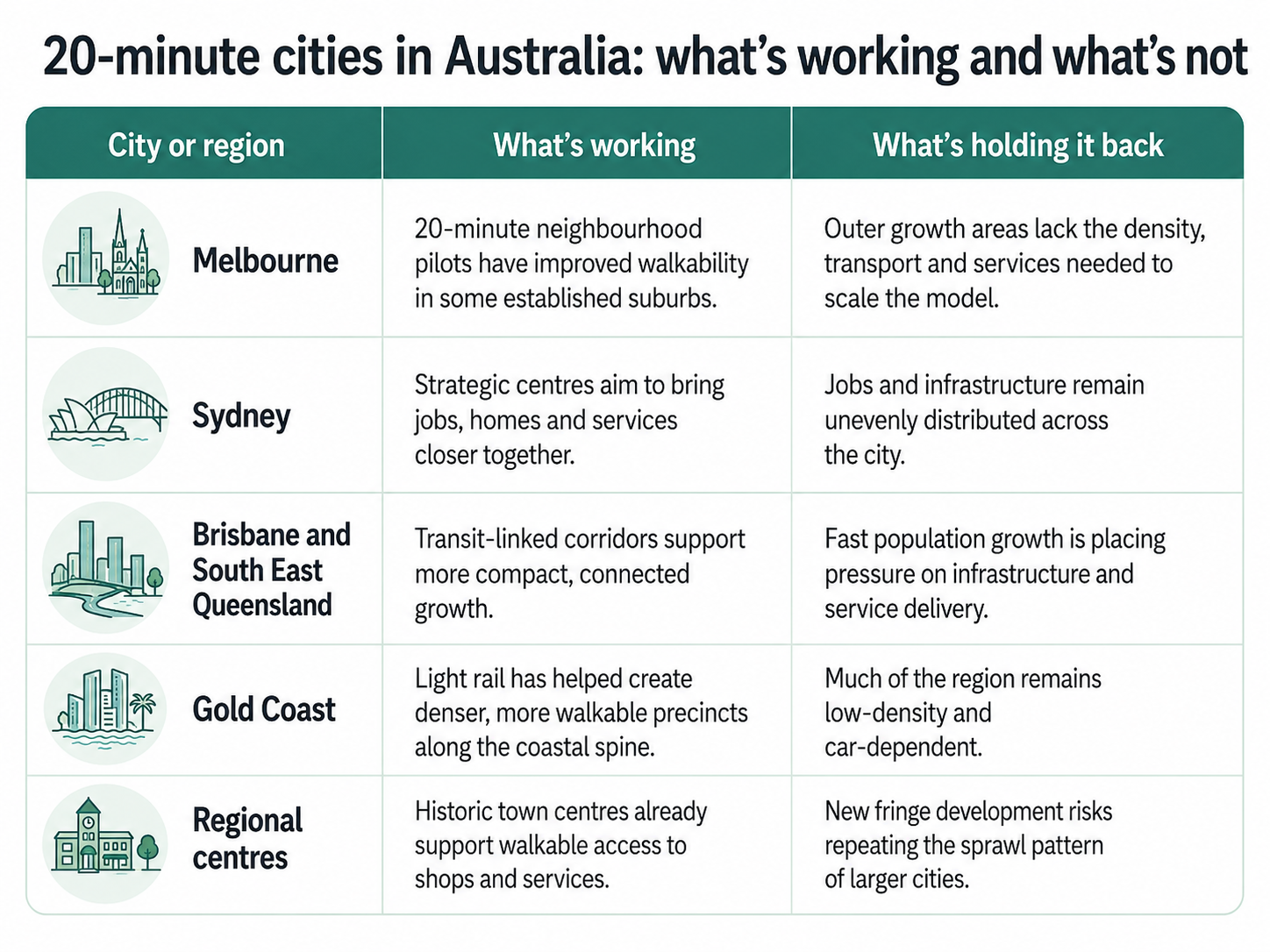
Melbourne leads Australian implementation through Plan Melbourne's "20-minute neighbourhood" pilots, with real gains in some established suburbs but limited reach in outer growth areas.
The biggest barrier is urban sprawl: car-dependent fringe suburbs lack the density, transport and services needed to make short trips viable.
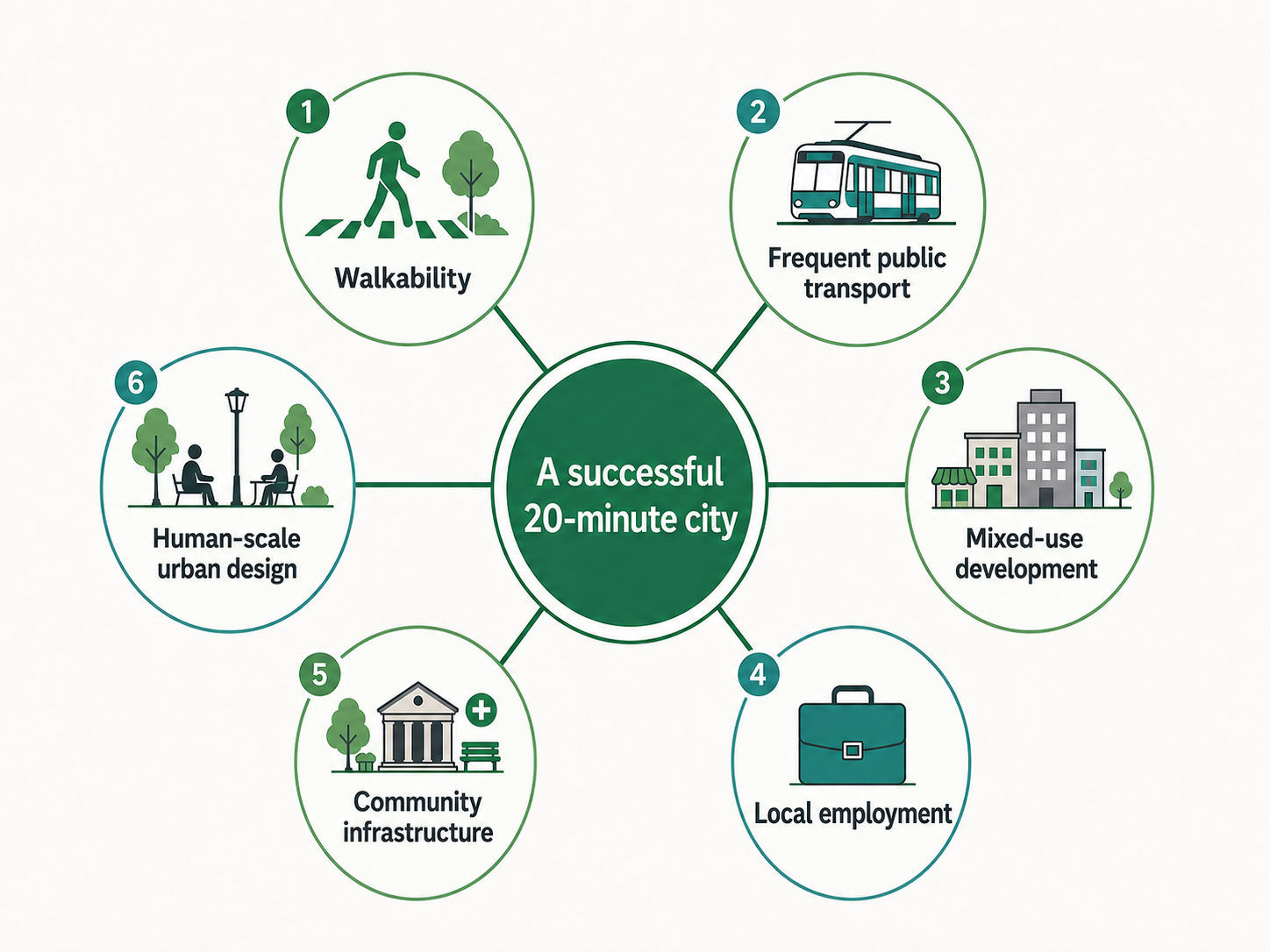
Success depends on walkability, frequent public transport, mixed-use zoning, local jobs and well-funded community infrastructure working together, not in isolation.
Demand for skilled planners is climbing, with Jobs and Skills Australia projecting 18.6% employment growth in urban and regional planning in the five years to May 2026.
What is a 20-minute city?
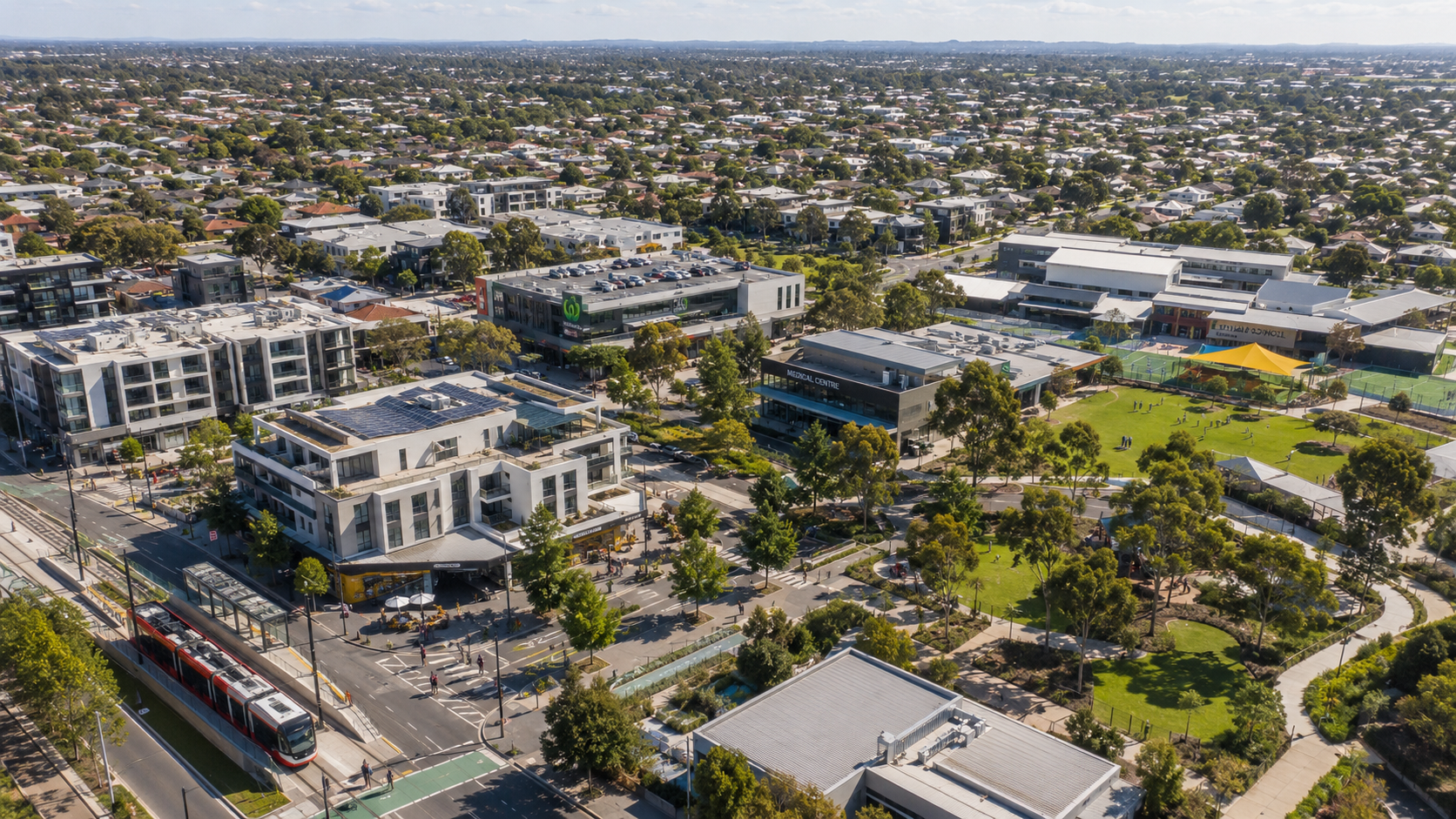
A 20-minute city is a place where most daily needs sit within a 20-minute round trip from home on foot, by bike or by public transport. Think of it as roughly an 800-metre walking radius to groceries, a GP, a school, green space and a transit stop.
The idea isn't new. Portland popularised the "20-minute neighbourhood" in the late 2000s, and Paris reframed it as the "15-minute city" under Mayor Anne Hidalgo, who rebuilt entire streets around proximity rather than cars. Melbourne adapted the concept into its own metropolitan strategy.
Why has Australia embraced the 20-minute city?
Twenty-minute cities answer several problems at once. Shorter trips cut transport emissions. Local spending supports local businesses. Walkable streets improve health. And neighbourhoods designed around people, not parking, simply feel better to live in.
One concept, many wins. It is easy to see why planners worldwide have embraced the model.
In Australia, the 20-minute city has gained momentum because it responds directly to the pressures shaping our cities: population growth, housing affordability, congestion, cost of living and changing work patterns.
Population growth. Australia's population is projected to reach between 28.3 and 29.3 million by 2027, according to the Australian Bureau of Statistics. Most of that growth lands in already-stretched capital cities.
Housing affordability. As detailed by the Australian Housing and Urban Research Institute, affordability pressures push households to the urban fringe, where homes are cheaper but services and transport are thin. Housing now tops the national agenda, ranking as the number one priority issue for 49% of Australians, according to the ITLS Transport Opinion Survey, September 2025.
Congestion. Adelaide is now Australia's most congested city, with an average congestion level of 55.1% and drivers losing roughly 109 hours a year to rush-hour traffic, according to the 2025 TomTom Traffic Index. Fewer forced car trips means a lighter load on clogged roads.
Commuting realities. Australians now travel about 37 km and 63.7 minutes a day on average, and 64% still drive to work, according to the Real Insurance Real Commute Report 2025. More telling: our tolerance for the daily slog has stretched to 91 minutes one way before we'll consider moving house or changing jobs, up from 62 minutes in 2022. We're not happier about commuting. We're just enduring more of it.
Cost-of-living pressure. Some 71% of Australians say rising cost-of-living pressures have hit their commuting expenses, according to the same report. When a trip to work eats into the grocery budget, the case for keeping daily life local grows louder.
Changing work patterns. Hybrid work reset the daily rhythm. When millions stopped commuting five days a week, the local high street suddenly became the centre of daily life, and the case for vibrant, well-serviced neighbourhoods got stronger.
How are Australian cities implementing the 20-minute city?
Each capital interprets the concept through its own geography, governance and growth story. The results vary widely.
Is Melbourne becoming a 20-minute city?
Melbourne is Australia's clearest 20-minute city test case. Plan Melbourne, the state's long-term metropolitan strategy, made "20-minute neighbourhoods" a headline goal and ran pilot programs in suburbs including Croydon South, Strathmore and Sunshine West.
The pilots tested practical interventions: better footpaths, safer crossings, upgraded local parks and connections to shops and transit. Evaluation found genuine gains in walkability and community use in established middle-ring suburbs that already had the bones of density and services. The catch? Outer growth corridors, where housing is being built fastest, often lack the population density, public transport and local employment to make the model stick.
Sydney's strategic centres approach
Sydney pursues proximity through a polycentric structure rather than the neighbourhood label. The Greater Cities Commission framed Sydney as a "metropolis of three cities", aiming to bring jobs, services and homes closer together so fewer residents need to travel across the basin for work. The ambition is bold, but delivery hinges on shifting employment westward, a slow structural change that takes decades, not budget cycles.
Brisbane and South East Queensland
Brisbane's planning strategies emphasise compact, transit-linked growth along key corridors, with neighbourhood centres designed to serve daily needs locally. As South East Queensland prepares for major population growth ahead of the 2032 Olympics, the pressure to connect new communities with transport and services is intensifying.
Gold Coast growth and connectivity
The Gold Coast shows both promise and tension. Its light rail line has anchored denser, more walkable precincts along the coastal spine and demonstrated how transit can reshape travel behaviour. Yet much of the city remains low-density and car-oriented, a reminder that one good transport line can't retrofit an entire region overnight.
Regional cities
Regional centres such as Ballarat, Bendigo and Newcastle are, in some ways, natural 20-minute cities. Their compact historic cores already cluster services within walking distance. The challenge is protecting that walkable character as populations grow and new estates spread outward, repeating the sprawl pattern of the capitals.
What makes a successful 20-minute city?
A successful 20-minute city depends on several elements reinforcing each other. Pull one out and the model weakens.
- Walkability. Safe, shaded, connected footpaths that make walking the obvious choice for short trips.
- Frequent public transport. Turn-up-and-go services that extend the 20-minute reach beyond walking distance. It matters: 32% of Australians named improving public transport a top transport priority in the ITLS Transport Opinion Survey, September 2025.
- Mixed-use development. Homes, shops, offices and services woven together so daily needs sit nearby, not zoned apart.
- Local employment. Jobs close to home so the neighbourhood works during the day, not just at night.
- Community infrastructure. Parks, libraries, schools and healthcare that give people reasons to stay local.
- Human-scale urban design. Streets and buildings shaped around people rather than traffic flow.
The lesson from the pilots is blunt: pour high-density housing into a suburb without transport, jobs and services, and you don't get a 20-minute neighbourhood. You get a denser car-dependent one.
Where does the 20-minute city model struggle?
The model struggles most where Australian cities were built for the car, which is most places.
- Urban sprawl. Decades of low-density fringe development created suburbs where distances are simply too great to walk and densities too low to support frequent transit or local shops.
- Car dependency. In many outer suburbs, the car isn't a choice; it's a necessity. Retrofitting these areas for proximity is far harder than designing it in from the start.
- Infrastructure funding. Footpaths, transit, parks and services cost money, and competing priorities across federal, state and local government make sustained investment difficult.
- Housing supply tensions. The model needs gentle density, yet many established neighbourhoods resist new housing, while greenfield development keeps pushing outward.
- Political and community resistance. Changes to streets, parking and zoning can spark fierce local pushback, slowing or shrinking ambitious plans.
Is the 20-minute city actually working in Australia?
The honest answer is: partly, and unevenly. The 20-minute city is working in places that already had the ingredients, and struggling in the very areas that need it most.
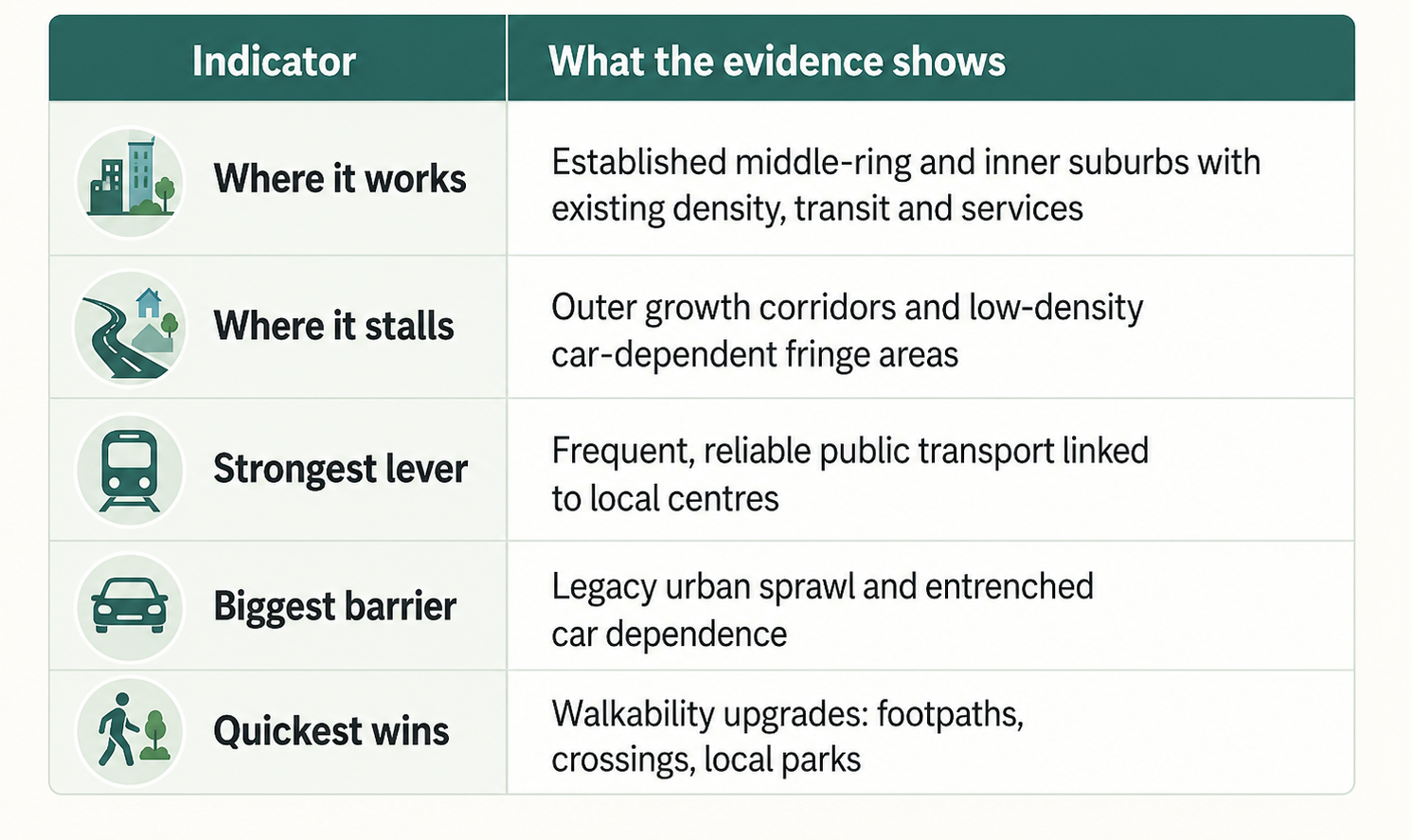
Melbourne's pilots prove the concept can deliver real improvements in liveability and local activity when conditions are right. The measurable gains, though, cluster in suburbs that started with good bones. The uncomfortable truth is that the suburbs most in need of better access, the car-dependent fringe, are the hardest and slowest to transform. Progress is real, but it's patchy, and it leans heavily on long-term political commitment and funding that often outlasts electoral cycles.
What could Australian cities look like by 2050?
By 2050, Australia's most successful cities will likely be networks of connected, walkable neighbourhoods rather than single sprawling centres, shaped by four converging trends.
- Climate resilience. Expect more urban greening, tree canopy and cooling infrastructure as cities adapt to hotter summers and the urban heat island effect, making walkable streets liveable year-round.
- AI and smart cities. Real-time data on movement, demand and infrastructure will let planners design and adjust neighbourhoods with far greater precision, from transit frequency to where the next park should go.
- Active transport. Cycling and micromobility networks will extend the practical reach of every neighbourhood, blurring the line between the 20-minute walk and the 20-minute ride.
- Smarter strategic planning. Future-focused planning will treat proximity as a baseline expectation, designing it into new communities from day one rather than retrofitting it later at greater cost.
None of this happens on its own. It takes planners who can read data, navigate policy, design for people and broker agreement among competing interests. Interested in shaping more liveable communities? Explore the UTS Online Master of Urban Planning and Graduate Certificate in Urban Planning and Design and learn how planners use policy, design and data to turn urban ideas into real places.
Can Australia realistically build the 20-minute city?
Yes, but selectively and over time, not everywhere at once. Australia can realistically achieve 20-minute neighbourhoods in well-located established suburbs and in new communities designed around proximity from the outset. Retrofitting the sprawling car-dependent fringe is the harder, slower task, and full transformation there may take generations.
What's clear is that the model's success rests less on the concept and more on execution: sustained funding, joined-up government, gentle density in the right places and frequent public transport. Above all, it rests on people. As Professor Heather MacDonald of UTS puts it, one of the top skills planners need is "the ability to broker solutions among many competing stakeholders and invent new solutions to complex conflicts".
That capability is in demand. Jobs and Skills Australia forecasts Australia will need 16,200 urban and regional planners by 2026, an 18.6% increase from roughly 13,700 in 2021, according to data cited by the Planning Institute of Australia. But the numbers only tell part of the story. PIA has warned that Australia is facing a critical shortage of planners, with growing workloads and delays at the same time governments are trying to respond to housing, infrastructure and climate resilience pressures.
The professionals who shape these future communities will need strategic planning capability, urban design expertise, data and spatial analysis skills, and a deep grasp of sustainable development. For those drawn to that work, postgraduate pathways such as the UTS Online Master of Urban Planning and the Graduate Certificate in Urban Planning and Design build exactly these capabilities, accredited by the Planning Institute of Australia and designed around real-world challenges.
The 20-minute city isn’t a finished product. It’s a work in progress, shaped suburb by suburb, decision by decision. By 2050, the cities we live in will be shaped not by accident, but by deliberate planning choices made today.
With the UTS Online Master of Urban Planning, you can build the capability to be part of that work, helping turn the promise of the 20-minute city from a strategic idea into a reality on the ground. Explore the Master of Urban Planning or Graduate Certificate in Urban Planning and Design, or speak with a Student Enrolment Adviser to understand which pathway best aligns with your background and future career aspirations.
Frequently asked questions
Imagine if your daily to-do list, the grocery run, the school drop-off, the GP visit, a coffee, a park visit or the commute, did not take over your morning. That is the promise of a 20-minute city: a neighbourhood where most everyday needs can be reached close to home by walking, cycling or public transport.
In planning terms, it is often understood as an 800-metre walkable radius around where people live. The aim is to reduce car dependence, improve access to essential services and create more liveable, connected communities.
The biggest benefit is time. A 20-minute city gives people back the hours often lost to long commutes, traffic and everyday trips that require a car. When more daily needs are closer to home, communities can become healthier, more connected and easier to move through.
The model can also reduce transport emissions and congestion, support active transport, strengthen local economies and improve access to services. In practice, it is about creating neighbourhoods where convenience, connection and liveability are built into the way people move through everyday life.
Melbourne is one of Australia’s clearest examples of the 20-minute city in action. The idea has been embedded in Plan Melbourne, with 20-minute neighbourhood pilots tested in outer suburbs such as Croydon South, Strathmore and Sunshine West.
These projects show what is possible in established suburbs where shops, services, schools and transport are already relatively close together. The bigger challenge is Melbourne’s outer growth areas, where lower density, limited public transport and fewer local services make the 20-minute model harder to achieve.
Yes, but not by asking people to simply drive less. Australian cities can reduce car dependence when walking, cycling and public transport become safe, convenient and realistic alternatives for everyday trips.
That means sustained investment in frequent public transport, connected walking and cycling networks, mixed-use development and more local employment. It is most achievable in well-located established suburbs and in new communities designed around proximity from the beginning. Retrofitting low-density, car-dependent fringe suburbs is possible, but it is a much slower and more complex task.
Walkable communities make everyday life easier, healthier and more accessible. When people can walk to shops, parks, schools, transport, healthcare and local services, they are less dependent on cars and more connected to the places around them.
They also make cities more equitable. Children, older residents, people with disability, lower-income households and those who do not drive all benefit when daily needs are close, safe and easy to reach. At their best, walkable communities support better health, lower emissions, stronger local businesses and more socially connected neighbourhoods.