Australia’s housing crisis isn’t just about supply. It’s a planning problem
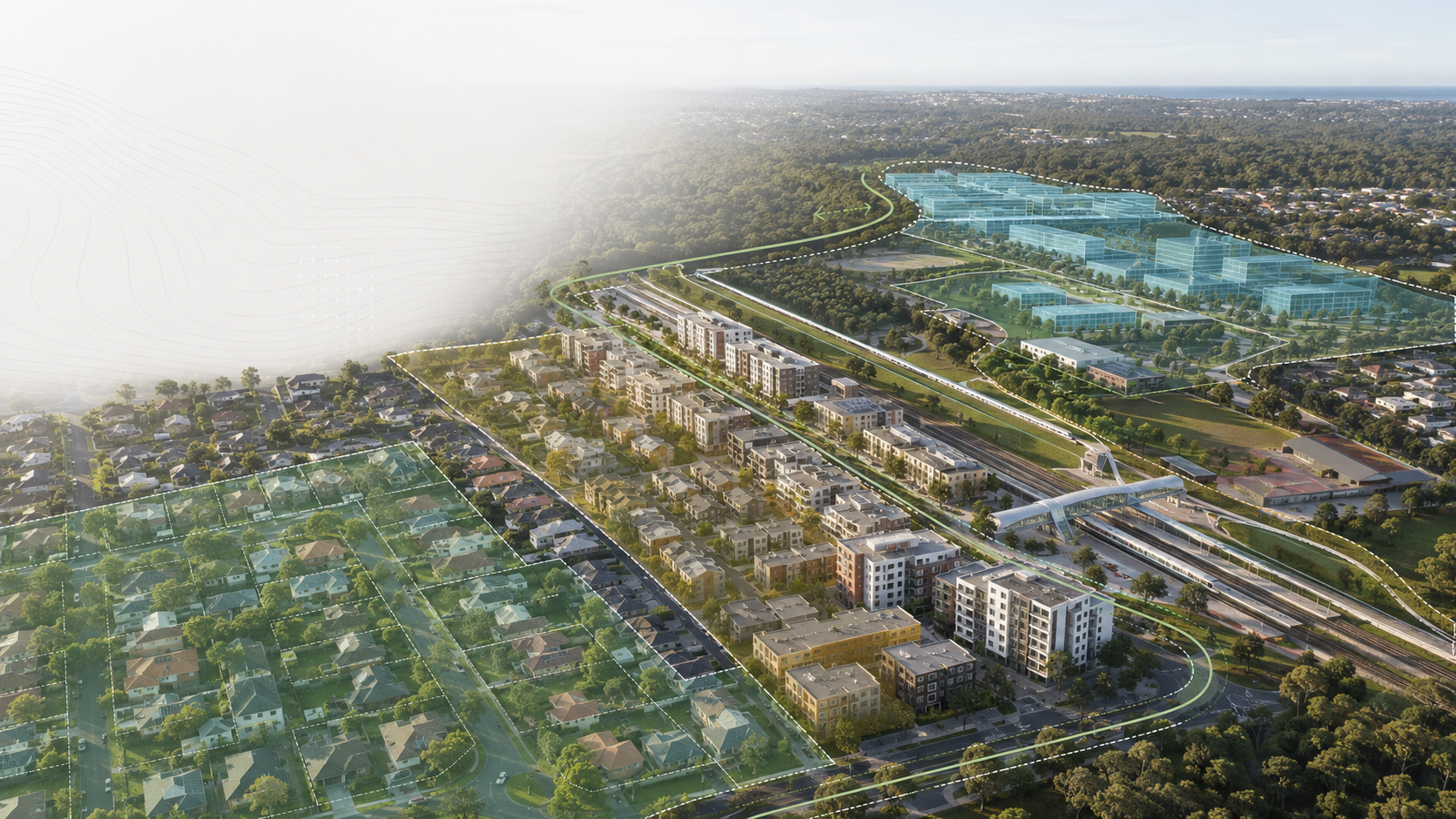
Australia added roughly 624,000 people in the year to September 2023, the largest annual population increase on record. The housing system barely flinched. Not because homes weren't needed, but because the system designed to deliver them, built on zoning laws, approval frameworks and infrastructure schedules inherited from another era, was never configured to move that fast.
But this is not a story of inevitability. It is a story of opportunity. Housing crises are shaped by policy, planning and investment decisions, which means they can also be changed by better ones. The professionals who step up to shape those decisions will help define the next generation of Australian cities.
This article unpacks those decisions: the zoning rules locking established suburbs into low density, the approval systems that price out smaller developers, the infrastructure timing gaps that turn greenfield land into dormitory sprawl, and the density debates Australian cities keep circling without resolution. It also examines what reform looks like in practice, who is building the policy responses, and why the planner, not the developer, has become the key figure in fixing what’s broken.
Australia's housing crisis is a planning problem as much as a construction problem, shaped by zoning rules, approval delays and infrastructure timing that predate today's market.
The National Housing Accord targets 1.2 million new homes between mid-2024 and mid-2029, but supply alone won't fix affordability without coordinated infrastructure and transport planning.
The "missing middle", townhouses, terraces and low-rise apartments, remains under-supplied because much of Australia's residential land is locked into low-density zoning.
Approving more homes fails when infrastructure, transport, jobs and community facilities don't arrive alongside them.
Employment in urban and regional planning is projected to grow well above the national average, with demand rising for professionals who can navigate complex, interconnected planning systems.
Why Australia's housing crisis is bigger than supply
Australia's housing crisis is not a single problem. It is several problems wearing the same coat.
The headline numbers are confronting. The 2024 Demographia International Housing Affordability report ranks Sydney as the second least affordable housing market in the world, behind only Hong Kong. Melbourne and Adelaide also sit near the bottom of the global affordability ladder. The National Housing Supply and Affordability Council has warned that Australia faces a structural shortage of well-located, appropriately priced housing, not just insufficient volume.
In 2022, the National Housing Accord, agreed between the Commonwealth, states and territories to set a target of 1.2 million new well-located homes over five years from 1 July 2024. But early delivery has lagged that ambition. According to the Australian Bureau of Statistics, dwelling approvals nationally fell across 2023, sitting well below the trajectory required to meet the accord target.
The supply framing is understandable. It is measurable, politically tractable and satisfying in its simplicity. Build more, prices fall. But the evidence is more complicated.
Population growth isn't the villain. Misalignment is.
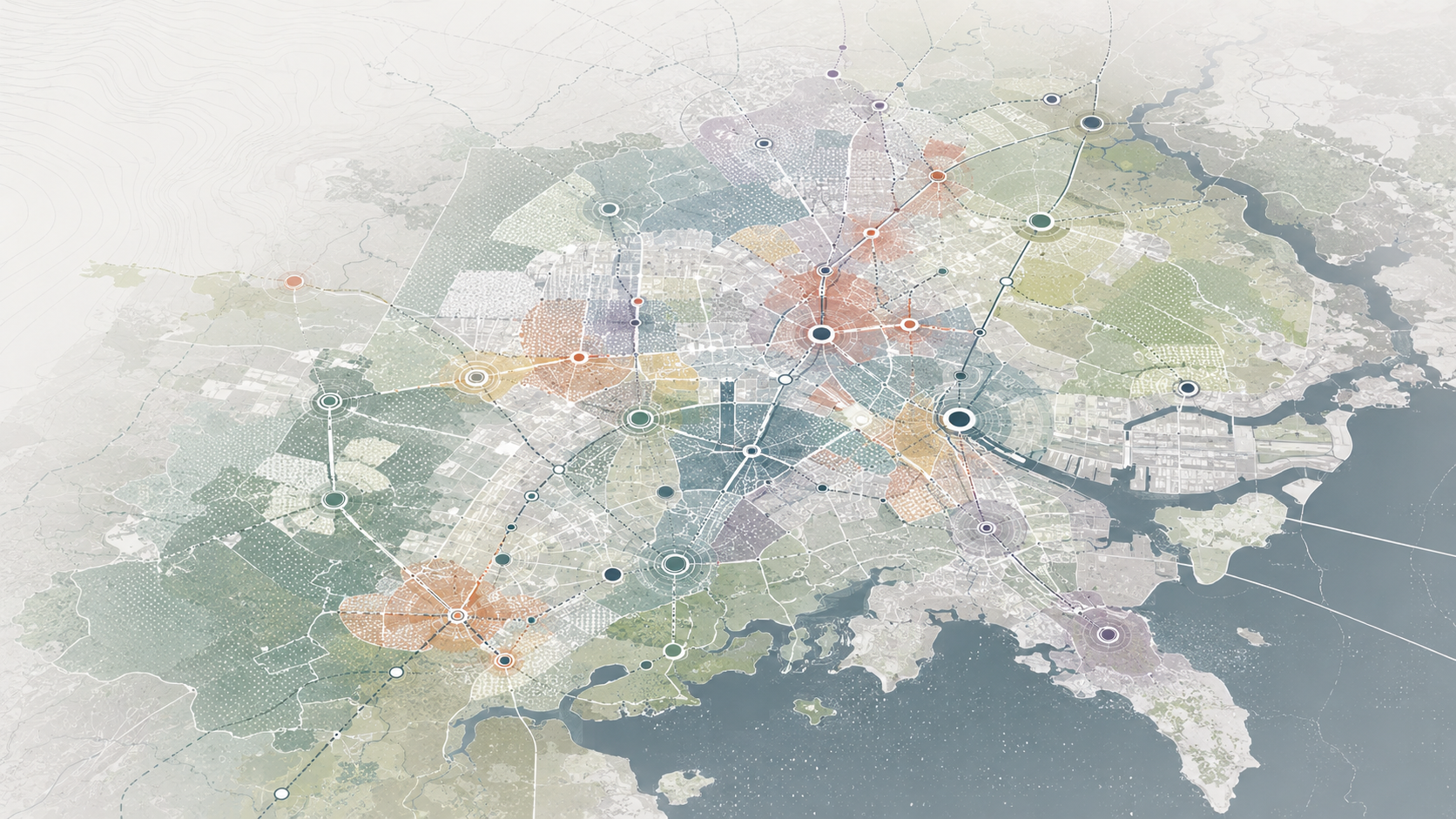
Australia's population grew past 27 million in 2024, with net overseas migration rebounding sharply following the pandemic. That growth concentrates in a handful of cities: Sydney, Melbourne, Brisbane and South East Queensland absorb the majority of new arrivals. These are also the cities where housing is least affordable and planning systems are most constrained.
The problem isn't growth itself. It's the mismatch between where people are arriving and where the housing system is configured to put them. When in-migration runs faster than planning systems can release well-located, serviceable land, prices rise in the places least able to absorb pressure. This is the structural failure at the heart of the crisis.
Infrastructure timing: the gap nobody talks about
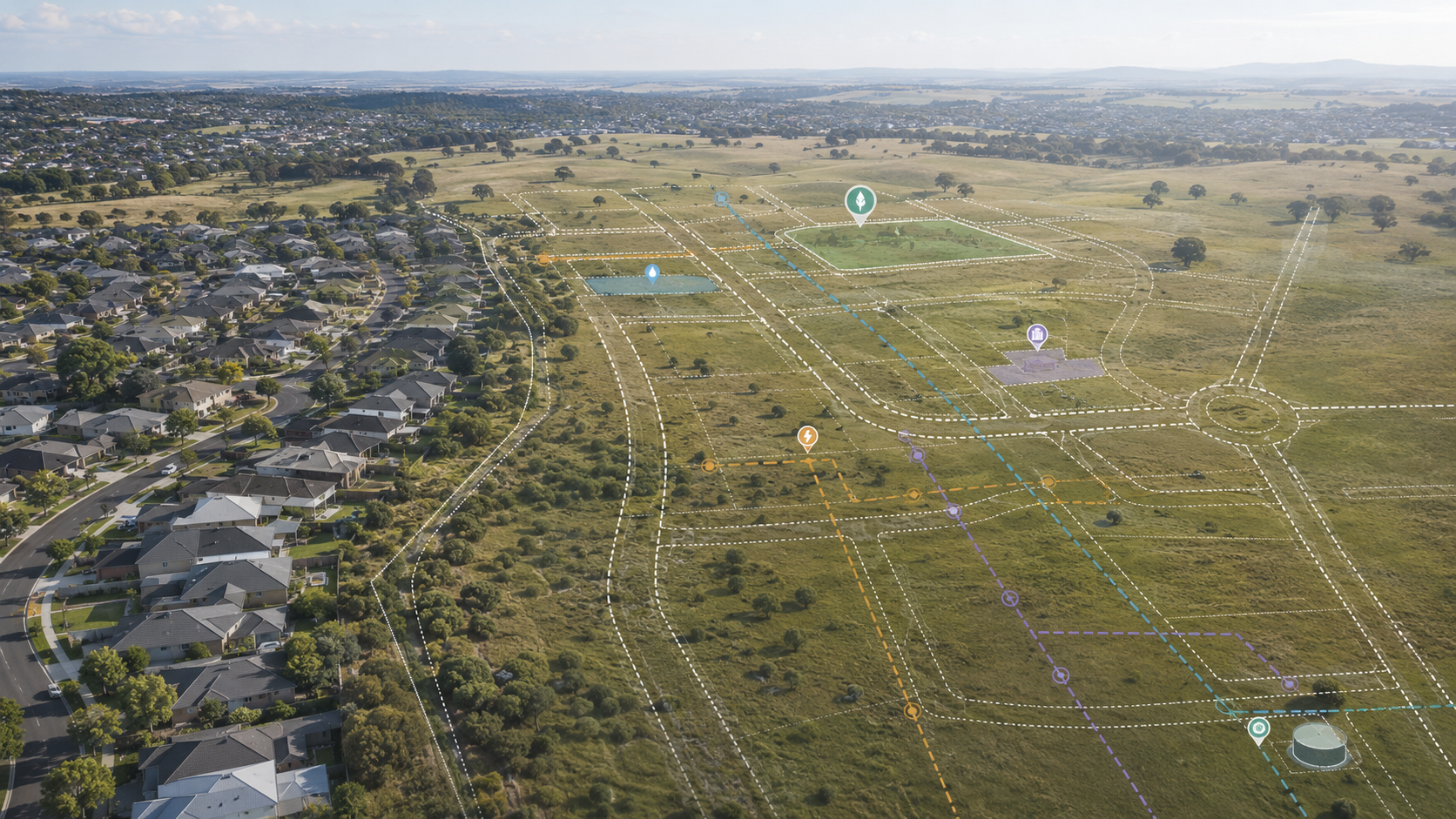
A block of land without water, sewerage, power or road access isn't developable land. It's a paddock with potential.
Infrastructure Australia has consistently flagged that infrastructure delivery struggles to keep pace with housing demand, particularly in greenfield growth corridors on the urban fringe. The Outer Sydney Corridor, South East Queensland's growth edge and Melbourne's northern and western growth areas all share a version of the same problem: development approvals outpace the infrastructure needed to make those approvals buildable.
The result is a paradox familiar to any growth corridor planner. Land exists. Demand exists. But the homes can't be delivered because the pipes, roads and schools aren't there yet, or because the developer can't fund the infrastructure charges required to connect to the network. The cost of infrastructure servicing is increasingly being passed to developers, and through them to buyers, which compounds affordability pressure at precisely the point in the market where it's already most acute.
Housing diversity: the type problem, not just the quantity problem
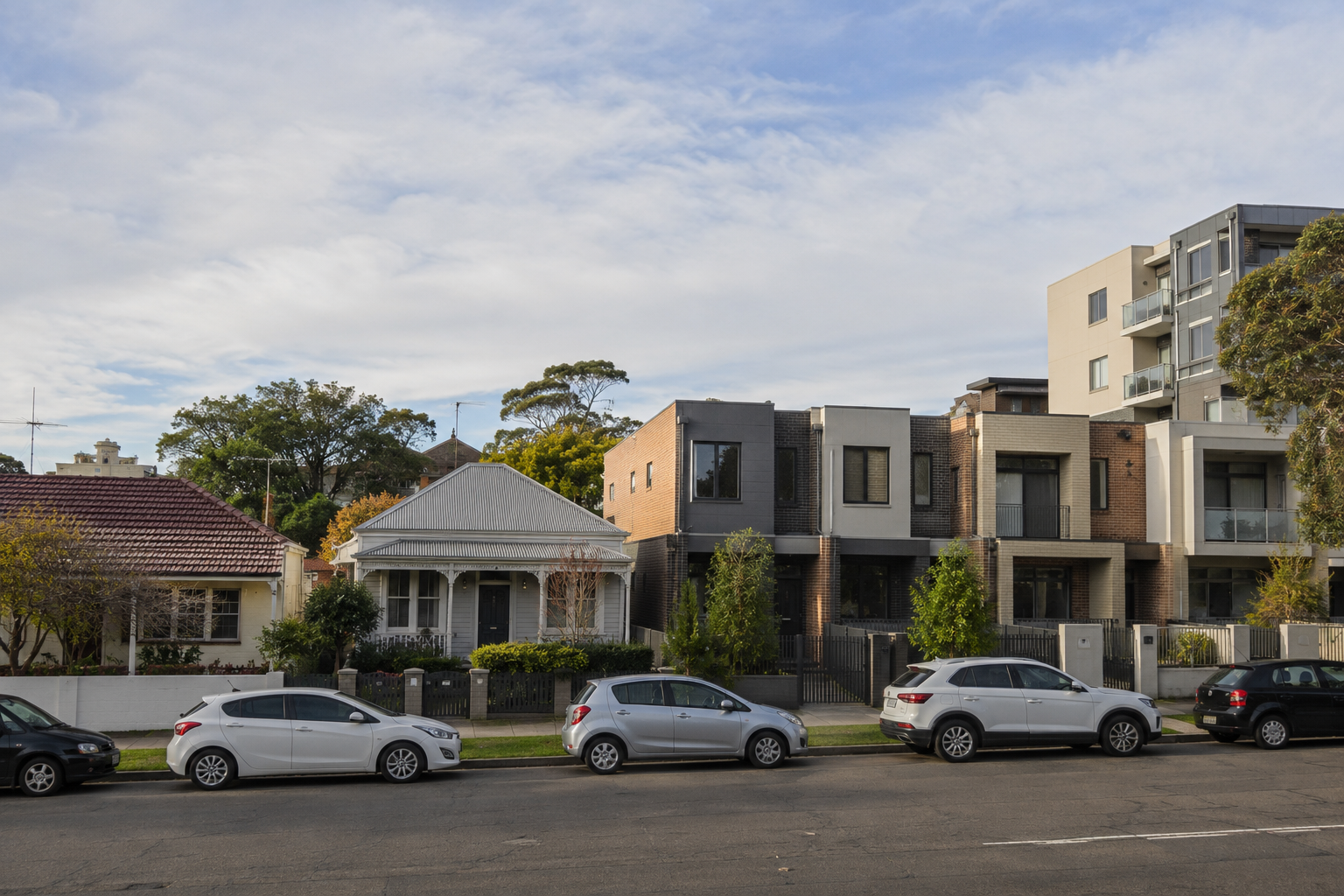
Australia builds a lot of detached houses and a growing share of high-rise apartments. What it builds far too little of is everything in between.
This gap, the "missing middle", leaves buyers with a stark choice: a house on the fringe or a tower in the centre, with limited options for families who want space without a 90-minute commute, or for downsizers who want to stay in their suburb without rattling around in a four-bedroom home.
Australian Housing and Urban Research Institute (AHURI) research has demonstrated that the missing middle is constrained primarily by planning, not by market preference or construction capacity. The demand exists. The regulatory environment suppresses the supply response.
The planning decisions quietly shaping Australia's housing market
Most of what drives housing outcomes is invisible to the average buyer. It lives in planning instruments, infrastructure schedules and council resolutions. Here's where the real leverage sits.
Zoning: the most powerful lever nobody votes on
Zoning is the single most consequential force in Australian housing. Zoning rules dictate what can be built where, and across much of metropolitan Australia, vast tracts of residential land remain locked into low-density categories permitting only detached houses.
This isn't a neutral technical arrangement. It's a political choice that protects incumbents, limits competition from new housing types and concentrates appreciation in existing dwellings. The economic consequences are significant. As AHURI analysis has shown, restrictive zoning in established, well-serviced suburbs effectively creates a regulatory tax on housing, artificially suppressing supply in the locations where demand is highest.
The land closest to jobs, transport and services is often the land where adding homes is hardest. That's not a market failure. It's a planning failure, and it's specific enough to be fixable.
Development approvals: when process becomes barrier
Time is money in housing development. A three-year approval process doesn't just cost time; it costs the feasibility of projects that might otherwise proceed.
The Productivity Commission's 2023 inquiry into housing construction identified planning and approval bottlenecks as a significant drag on supply, with assessment timeframes varying dramatically between councils and jurisdictions. In some NSW councils, approval timelines for medium-density projects have stretched beyond 24 months. In a rising cost environment, that delay can tip a viable project into an unviable one.
The distributional effect matters too. Large-scale developers can absorb approval risk and carry costs over long timelines. Smaller developers building townhouses and low-rise apartments, precisely the missing middle, can't. Slow approvals don't just delay housing; they distort who builds it and what they build.
Urban growth boundaries: genuine trade-offs, not simple solutions
Urban growth boundaries, used in Melbourne and, more loosely, in Sydney's strategic frameworks, contain sprawl and protect agricultural land, biodiversity corridors and green space. These are genuine public goods. The Melbourne urban growth boundary has contributed to land price inflation in fringe growth areas by constraining supply, while also preventing the kind of diffuse low-density sprawl that makes sustainable transport provision impossible.
The boundary is often presented as the villain in housing debates. That framing misses the point. The real challenge is that containing sprawl only improves outcomes if it's matched by genuine density uplift within the boundary. When growth boundaries are maintained but density reform is resisted in established suburbs, the result is pressure with nowhere to go.
Transport-oriented development: the logic is right, the execution is hard
Housing and transport are two halves of one decision. A home is only well-located if the occupant can reach a job, a school or a health service without spending two hours in a car.
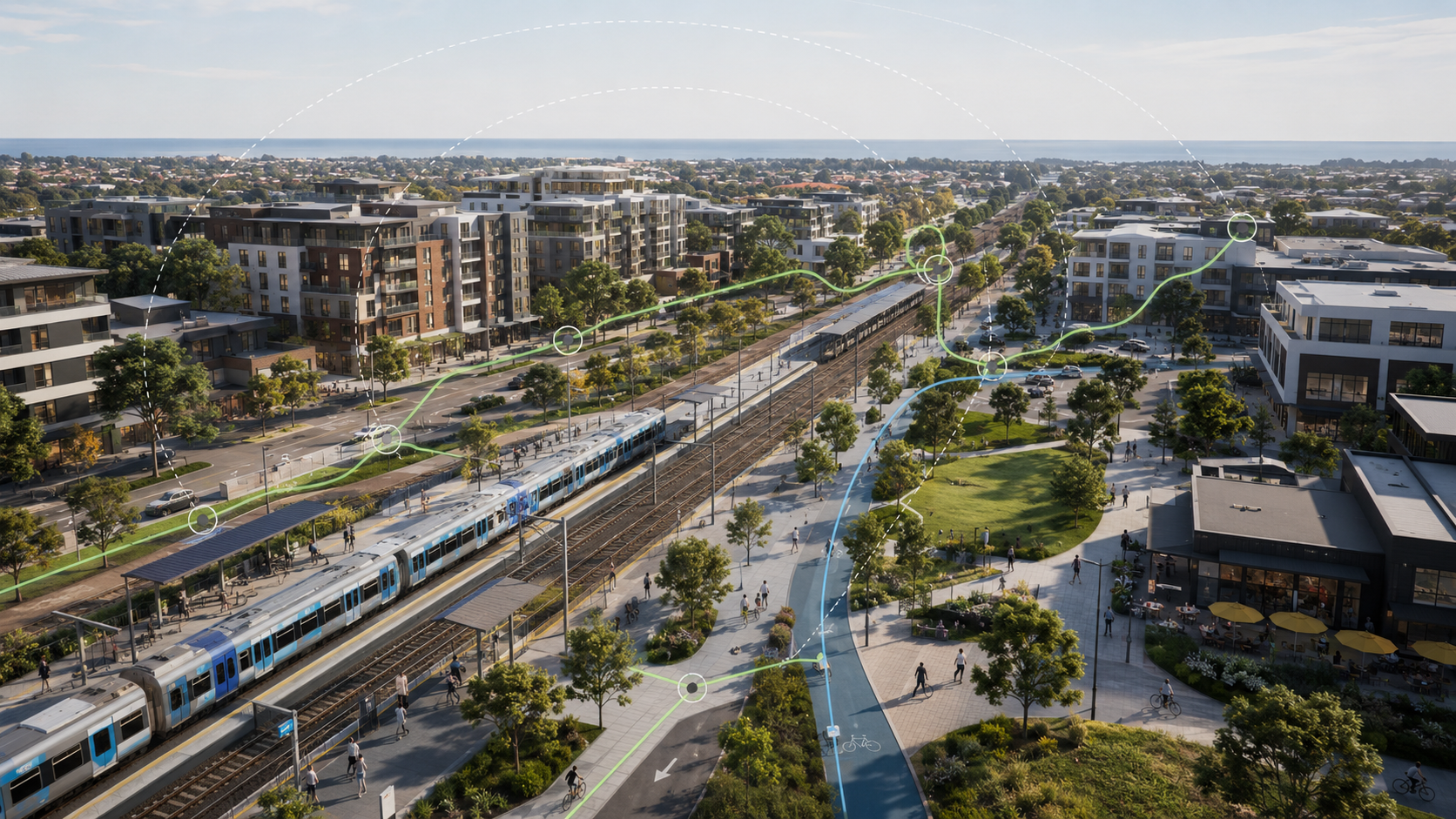
Transport-oriented development (TOD) has become the central strategic response across Australian cities precisely because it attempts to link supply to access. NSW's Transport Oriented Development program targets housing growth within 400 metres of train stations, creating a presumption in favour of higher density in these locations. Victoria's activity centre program concentrates housing intensification around nodes with good transit access.
The logic is sound. The execution is harder. TOD works when transport investment precedes or accompanies housing growth. When housing arrives first and transit follows years later, if at all, the result is car-dependent suburbs marketed as transit-oriented ones. The sequencing question, which comes first, the homes or the train line, remains one of the genuinely difficult problems in Australian planning.
The long shadow of historical decisions
The most confronting truth about Australia's housing crisis is that much of it was decided long before today's planners arrived.
Single-dwelling zoning was rolled out across vast tracts of suburbia in the postwar decades, in part as deliberate policy to support home ownership, in part as a reaction to the density of older inner-city housing that was then considered undesirable. Infrastructure corridors were preserved, or weren't. Transit lines were funded, or shelved. Development contribution frameworks were designed in ways that shifted costs in ways that would compound over time.
Those choices don't reverse easily. A suburb zoned R2 Low Density Residential in 1970 carries that designation into 2024 unless a specific planning decision changes it. The inertia of historical planning is one of the hardest forces to overcome, and it's one of the least-discussed drivers of the current crisis.
The density debate Australia keeps avoiding
Density is the third rail of Australian planning. Everyone agrees we need more homes. Far fewer agree on putting them next door.
Why opposition to density persists
Resistance to density is rarely irrational, even when it's counterproductive. Residents opposing medium-density development in established suburbs are often responding to real past experience: approvals that delivered apartments without parking solutions, or subdivisions that overwhelmed school capacity, or infill development that shadowed backyards without improving streetscapes.
The lesson from these failures isn't that density doesn't work. It's that density without integration fails. When new housing arrives without the infrastructure to support it, residents' opposition is a reasonable response to a genuine problem. The error is to use that experience to resist all density rather than to demand better-planned density.
The missing middle: regulatory problem, not market failure
Townhouses, terraces, duplexes, manor homes and low-rise apartments occupy a peculiar position in Australia's housing debate. They're precisely the housing types that research suggests most households want: more space than a flat, less maintenance than a house, closer to where they work and live their lives. And they're precisely the housing types that planning systems make hardest to deliver.
AHURI has documented that the missing middle isn't absent because developers don't want to build it or buyers don't want to buy it. It's absent because zoning forbids it across most of the residential land in Australian cities, and where it's permitted, approval pathways are complex and uncertain enough to deter the smaller builders who would typically deliver it.
This is a solvable problem. It requires political will more than technical innovation.
International evidence: what actually works
Auckland's 2016 upzoning reform, which permitted greater density across most of the city's residential land, is now widely cited as one of the most significant natural experiments in housing policy in the English-speaking world. Research published in the Journal of Urban Economics found that the reforms measurably increased housing supply and moderated price growth in affected areas. The supply response wasn't uniform or immediate, but it was real.
Minneapolis, which eliminated single-family zoning across the city in 2019, and Oregon, which required cities to permit duplexes on all residential land, offer similar evidence. The consistent finding: change the rules, and the homes follow. Not instantly, and not without complications, but the direction of the effect is clear.
Australian examples of reform in motion
Australian states are moving, if unevenly.
New South Wales has introduced low- and mid-rise housing reforms enabling dual occupancies, townhouses and low-rise apartments across a much wider range of residential zones, particularly near transport. The reforms faced significant political resistance, including from councils seeking exemptions.
Victoria's activity centre program identifies specific centres for housing intensification, with state-led planning controls to override local resistance where necessary.
South East Queensland's regional plan, ShapingSEQ, explicitly targets a higher share of infill development to absorb the region's substantial population growth, with a target of 60 per cent of new dwellings delivered as infill by 2041.
These are genuine reforms, but they're operating against deep structural resistance, and their impact will depend on consistent implementation rather than headline announcements.
Why approving more homes isn't enough
Here's the contrarian point that gets lost in supply debates: an approval is not a home. It's a permission slip. A suburb succeeds when the systems around the homes succeed too.
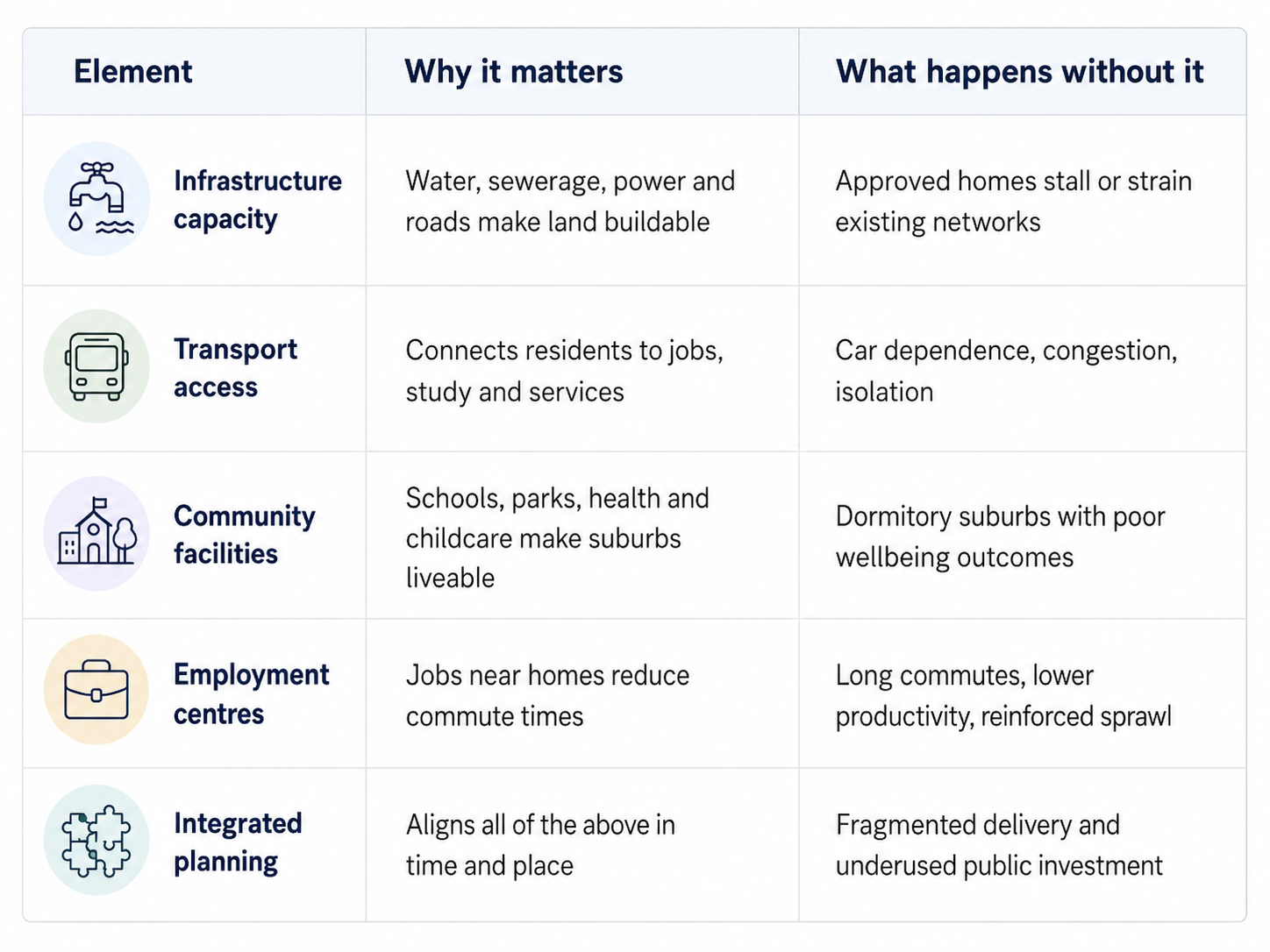
The thread running through every row is integration. Infrastructure Australia and state planning bodies increasingly frame the challenge not as building more homes but as building complete communities, where housing, transport, jobs and services arrive together rather than in disconnected waves. That coordination is the hard part. And it's precisely where skilled planning makes the difference between a suburb that works and one that doesn't.
This is where the real work of solving Australia’s housing crisis begins. It is not just about approving more dwellings. It is about coordinating infrastructure, navigating community needs, managing competing priorities and designing places that work in everyday life.
These are the strategic planning and leadership capabilities at the heart of the UTS Online Master of Urban Planning. The course is designed for professionals who want to help shape better urban futures, building the skills to turn a paddock with potential, an underused precinct or a growing suburb into a connected, liveable community.
The Grattan Institute has noted that some of Australia's most acute liveability problems exist not in cities where housing is scarce, but in growth areas where housing was approved without the infrastructure to support a functioning community. Volume without integration produces quantity without liveability.
Planning reforms reshaping Australia right now
Governments have stopped treating housing as a market that will fix itself. A wave of reform is underway across every tier of government.
- National Housing Accord: The flagship commitment to 1.2 million new well-located homes over five years, backed by funding incentives for states that boost supply and penalties for those that don't.
- Housing Australia Future Fund: A $10 billion investment vehicle designed to fund social and affordable housing through investment returns, targeting 30,000 new social and affordable homes in its first five years.
- NSW Transport Oriented Development: State-led upzoning within 400 metres of 37 train stations, with a residential floor space ratio and height controls that override local planning instruments.
- Victoria's activity centre program: State-identified precincts for housing intensification, with planning controls developed by the state rather than the relevant council.
- Queensland infill targets: ShapingSEQ's target of 60 per cent infill by 2041 represents one of the most ambitious density commitments in Australian planning history.
- Approval process reform: Multiple jurisdictions are digitising planning systems, introducing deemed-to-satisfy pathways for complying development and piloting concurrent assessment processes.
The common ambition is clear. The common challenge is execution: turning policy into homes on the ground, which depends entirely on the capacity and skill of the planners administering these systems.
What the future of Australian cities actually demands
The pressures shaping housing won't ease. They'll compound, and they'll grow more complex.
Population forecasts point to sustained growth. The ABS projects the national population continuing to grow through coming decades, with the majority of that growth concentrating in capital cities. More people means more homes, but more urgently, smarter homes in smarter places.
Climate resilience has become a planning fundamental, not a discretionary add-on. Floods in South East Queensland and northern NSW, bushfires across eastern Australia and extreme heat events across every major city are reshaping where and how we can safely build. The Black Summer fires alone prompted a national rethink of development in bushfire-prone areas. Planning decisions made today determine which communities are resilient tomorrow.
New planning approaches are emerging in response. The 15-minute neighbourhood model, where daily needs sit within a short walk or ride from home, is influencing local planning frameworks in Melbourne, Brisbane and Adelaide. Precinct-scale planning, which coordinates housing, transport and infrastructure from the outset rather than delivering them in sequence, is gaining momentum. The Melbourne Metro Tunnel precinct planning offers one model.
Technology and data are transforming the discipline itself. Spatial analysis, GIS, urban analytics and digital scenario modelling now let planners test options, forecast demand and visualise growth with precision earlier generations could only imagine. The planner of the future is part strategist, part data scientist, part community broker.
Solving the housing crisis is a planning challenge
The temptation is to reach for a single fix: build more, migrate less, free up land. Australia's housing crisis resists simple answers because it was never a simple problem. It is the cumulative result of zoning choices, approval frameworks, infrastructure timing and transport decisions stretching back generations. Untangling it requires people who understand how all those pieces fit together and have the skills to move them.
That's why urban planners now sit at the centre of the national conversation. As Professor Heather MacDonald of UTS has observed, urban planners need to "communicate collaboratively with diverse stakeholders to understand the economic, environmental and social impacts of development." That's not a description of a technocrat processing applications. It's a description of someone navigating one of the most consequential intersections in public life.
Demand reflects this reality. Jobs and Skills Australia projects employment in urban and regional planning to grow well above the national average, driven by housing delivery targets, infrastructure pipelines and climate adaptation requirements. For professionals already working in planning, property, infrastructure or policy, deepening that expertise has become genuinely urgent.
As Matt Collins, CEO of the Planning Institute of Australia, has said:
"Australia is facing a critical shortage of planners, just as their expertise is needed more than ever,"
Postgraduate degrees designed for working professionals, including the UTS Online Master of Urban Planning, accredited by the Planning Institute of Australia, and the entry-level Graduate Certificate in Urban Planning and Design, develop the strategic, analytical and stakeholder skills the coming decade demands. Subjects spanning urban economics, infrastructure funding, spatial analysis, environmental impact assessment and development negotiation map directly onto the policy debates reshaping Australian cities right now. Explore the Master of Urban Planning or Graduate Certificate in Urban Planning and Design, or speak with a Student Enrolment Adviser to understand which pathway best aligns with your background and future career aspirations.
The homes Australia builds over the next decade will shape the lives of generations. The decisions behind them, zoning rules, approval systems, infrastructure sequences, transport corridors, will be made by planners. The question isn't whether we can build our way out of the crisis. It's whether we'll plan our way through it.

Frequently asked questions
Urban planning shapes housing affordability by controlling how much housing can be built, where it can be built and how long approvals take. Zoning rules determine permissible housing types and densities, while development approval processes affect the cost and certainty of delivery.
When planning systems restrict housing supply in well-located areas, or make approvals slow and unpredictable, costs rise and affordability falls. Reforms that enable more diverse housing near jobs and transport, paired with infrastructure investment, can ease price pressure over time. The relationship is not instant, but it is structural: the rules of the planning system set the ceiling on what the housing market can deliver.
Housing supply in Australian cities is constrained by low-density zoning across much of established suburbia, lengthy and uncertain development approval processes, and infrastructure delivery that often lags behind demand. Urban growth boundaries in cities like Melbourne can also limit fringe land supply.
Together, these factors reduce how many homes can be built in the locations where demand is highest. The Productivity Commission has identified planning and approval bottlenecks as a significant supply constraint, distinct from construction capacity or finance availability.
Missing middle housing refers to medium-density dwellings that sit between detached houses and high-rise apartments. This includes townhouses, terraces, duplexes, manor homes and low-rise apartment buildings.
It is called “missing” because much of Australia’s residential land is zoned to permit only detached housing, making these forms difficult or impossible to build in many established suburbs. AHURI research has shown that the missing middle is absent primarily because of regulatory barriers, not because of a lack of market demand or builder capacity.
Urban planners design the frameworks and make the recommendations that determine where and how housing is built. They balance supply targets against infrastructure capacity, transport access, environmental constraints and community needs. They also coordinate land use and transport planning, assess development proposals and broker agreement among governments, developers and communities.
Because the housing crisis is driven by interconnected planning decisions made across decades, skilled planners are central to delivering more homes in well-located, liveable and resilient places. As planning systems across Australia undergo significant reform, professional planning capacity has become a critical limiting factor in the speed and quality of the housing response.
Urban and regional planning roles are projected to grow by 9.9% over five years and 17.6% over ten years in Australia, reflecting the increasing need for professionals who can help shape housing, transport, infrastructure and more liveable communities.
At the same time, the way Australia plans and delivers places is changing. Professionals who understand only development, construction or policy are increasingly being asked to solve challenges that sit across land use, approvals, transport access, infrastructure timing and community needs.
The UTS Online Master of Urban Planning is designed to build the strategic planning capability needed for this moment. You’ll develop the skills to navigate complex planning systems, coordinate competing priorities and help shape more liveable, sustainable and resilient communities. In a sector facing growing demand for skilled planners, it is a pathway to building both impact and career resilience.
Planning reforms can improve housing affordability by enabling more homes in well-located areas, streamlining approvals and encouraging more diverse housing types. Upzoning around transport corridors, transport-oriented development policies and faster assessment pathways can increase supply where demand is highest.
International evidence from Auckland and Minneapolis shows that zoning reform can measurably increase supply and moderate price growth. The National Housing Accord and Housing Australia Future Fund also direct investment towards social and affordable housing that markets alone will not deliver. The consistent finding from policy research is that coordinated reform across zoning, approvals and infrastructure investment is more effective than any single lever applied in isolation.
Transport-oriented development, or TOD, is a planning approach that concentrates housing growth around train stations and major transit corridors. It matters for housing because it links supply to access: homes near transit allow residents to reach jobs, schools and services without car dependency.
NSW’s TOD program targets housing uplift within 400 metres of 37 train stations. Victoria’s activity centre program similarly focuses density around transit-accessible nodes. TOD works best when transport investment and housing approvals are sequenced together. When housing arrives first and transit follows years later, the result can be car-dependent suburbs that replicate the problems TOD is designed to solve.